CGHA research evaluates public-health policies using empirical evidence rather than assumption. Our reports combine economics, epidemiology, behavioural science, field research and institutional analysis to understand whether policies achieve their stated objectives and what can be learned from their implementation.

An investigative narrative revealing how smartphones, deregulation, and pandemic isolation turned America’s pastime into its newest addiction — and the book behind CGHA’s gambling research programme.

Global Health Accountability Index: updated provisional assessment, October 2026

Prediction markets challenge inherited legal categories. Regulation should begin with economic function, evidence of harm and realistic alternatives.

CGHA research assesses vaccine benefits, injuries, evidence quality, public trust and the justification for compulsory policies.

Updated local sampling through October 2026, with historical baselines, charts and analysis of legal authorizations and enforcement.

Advocacy scientific uncertainty and the economics of permanent campaigning

Institutional alignment and international health governance

Professional pressure and scientific debate during COVID 19

IARC hazard classifications academic influence and litigation

How legal costs, scientific uncertainty and procedural pressure can shape outcomes before a decision on the merits. Paper 1 develops CGHA’s lawfare framework and tests its limits across litigation, scientific speech and regulation.

A product-specific framework for regulating kratom leaf, concentrated extracts, enhanced 7-OH and novel analogues, with evidence on dependence, trade and substitution.

The pre-pandemic coronavirus research record establishes technical capability, not proof of origin. This paper sets out an independent accountability agenda for high-consequence research.
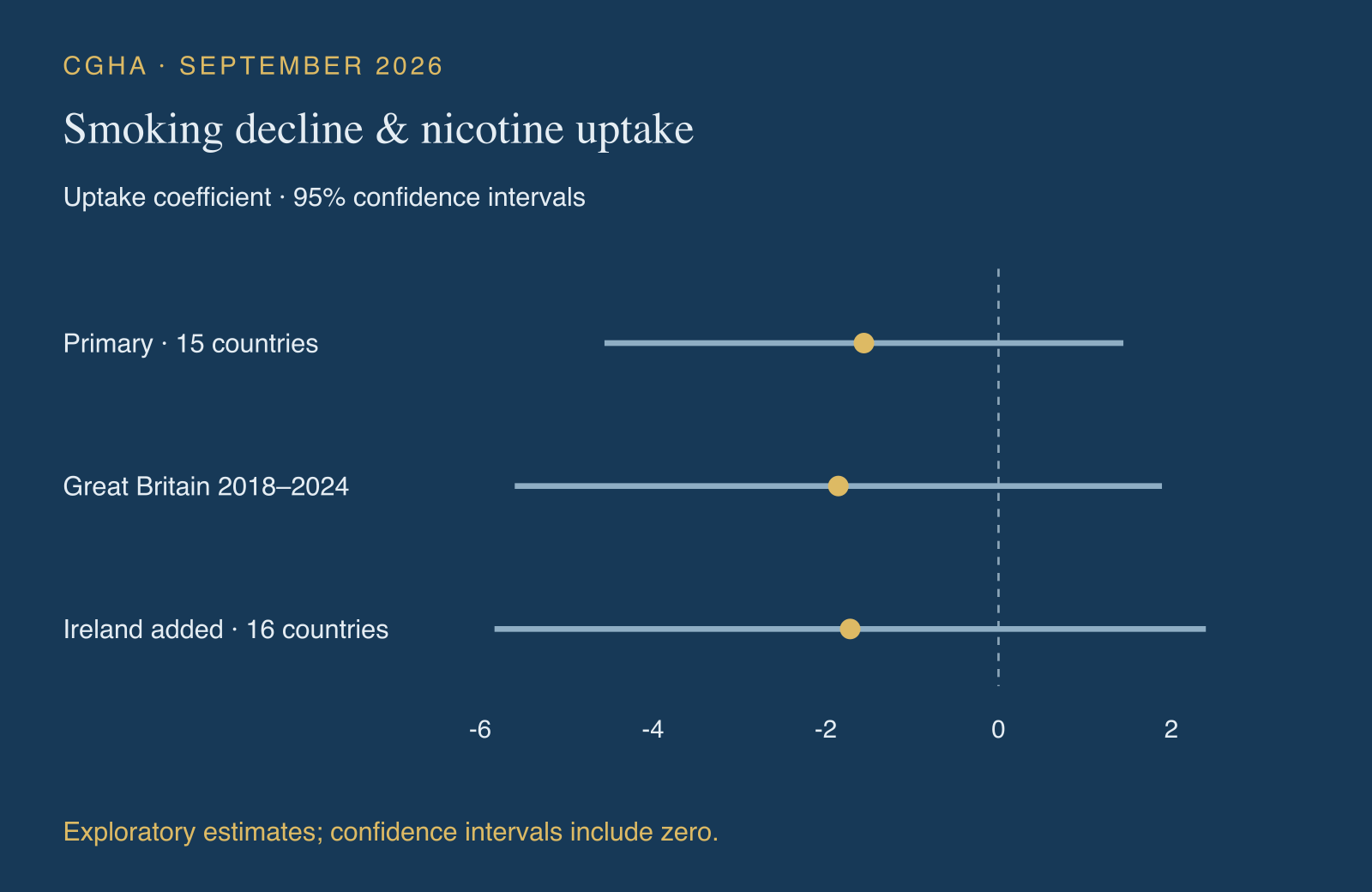
A 15-country national-survey model examines nicotine uptake and adult smoking change, with leave-one-out checks, endpoint sensitivities and a separate timing study. Estimates remain imprecise.
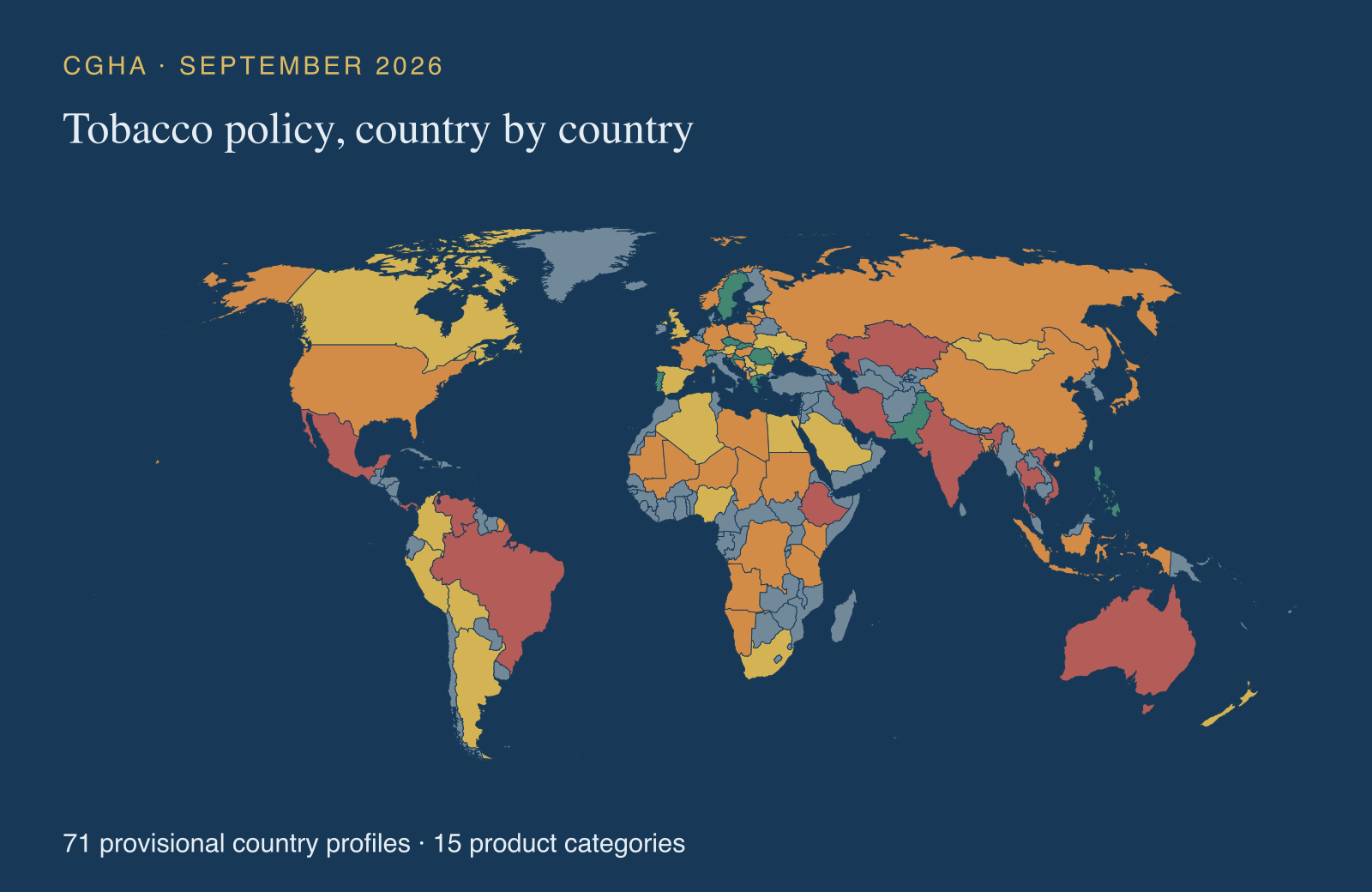
Explore 71 provisional country assessments, four policy dimensions and a common 15-product access matrix, alongside clearly distinguished smoking-outcome data.

How the post-anthrax expansion of biodefense linked intelligence needs, research ambitions and public-health authority without building equally strong external oversight.

A product-specific assessment of vaccine benefits, risks and data integrity that separates mortality from incidence and tests claims across methods and jurisdictions.

How regulatory exclusion creates informal nicotine supply chains. An exploratory study of 18 adult consumers in Montgomery County, PA: 16 of 18 obtained excluded products through friends. Prohibition may change the supplier without ending the demand.

Evidence from Montgomery County, PA (n=654): concern about addiction is widespread and trust in operators is low, yet support for legalization and participation remain substantial. Behavior tracks perceived system legitimacy, not trust alone.
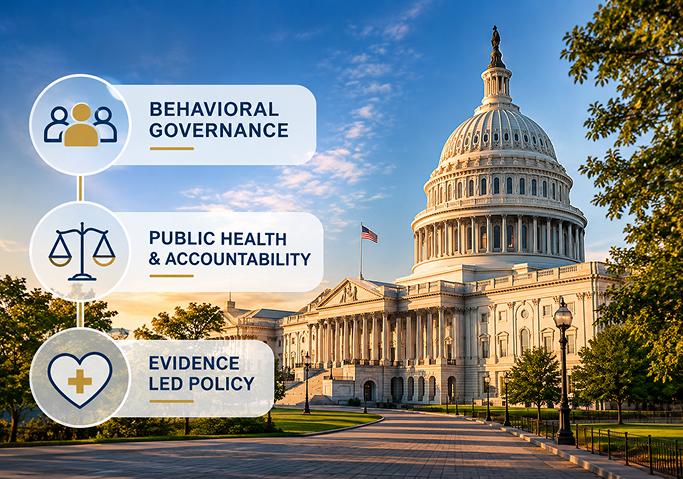
Why modern health politics increasingly seeks to manage lifestyle rather than reduce harm: real problems affecting some people are used to justify far broader systems of behavioral management.

Distrust of pharmaceutical companies is high and broadly similar across political groups, yet uptake varies sharply. Vaccine behavior is better understood as a judgment about the credibility, independence, and accountability of the governing system.

On continuous, frictionless betting markets and what the removal of natural stopping points means for consumers and regulators.

A flagship comparative review of Covid inquiries across countries and institutions: the decisions they scrutinized, the questions they left unresolved, and the lessons now shaping future pandemic governance.