Like many other areas of modern regulation, public health is increasingly being shaped by a familiar political dynamic: identifying a real problem affecting some people and then using it to justify far broader systems of behavioral management.
Smoking kills. Alcohol abuse destroys lives. Problem gambling can devastate families. Obesity contributes to enormous health burdens. Social media and digital technologies clearly affect mental health and attention. None of these harms are imaginary. But something important has changed in how institutions respond to them.
The old public-health model focused primarily on reducing involuntary suffering: infectious disease, unsafe water, maternal mortality, tuberculosis, malaria, malnutrition, and environmental hazards people could not reasonably avoid. The modern model increasingly extends far beyond these traditional areas. Activities once treated primarily as lifestyle choices, personal risks, or moral questions are increasingly reframed as addictions, behavioral disorders, public-health threats, or “commercial determinants of health.”
To be clear, none of this means governments have no role whatsoever. Governments can require truthful information, improve transparency, restrict fraud, limit youth access, encourage safer alternatives, and nudge firms toward healthier or lower-risk products. But there is an enormous difference between informing and nudging on the one hand, and coercing and managing on the other. That distinction is increasingly collapsing.
The underlying policy goal quietly shifts from reducing harm toward reshaping behavior. That is a profound political and philosophical change.
Voluntary and involuntary harm
The tension becomes especially obvious when comparing involuntary harms with voluntary risks. There is a profound moral difference between dying from contaminated water, contracting malaria, suffering from tuberculosis, or lacking emergency surgery and, by contrast, consuming alcohol, using nicotine, sports betting, overeating, or participating in speculative markets. One category largely involves involuntary suffering and weak agency. The other involves varying degrees of informed choice, pleasure, compulsion, and personal risk tolerance.
Yet increasingly, global-health institutions devote growing amounts of political attention to regulating voluntary behavior among consenting adults. This is particularly visible in the rise of the “commercial determinants of health” framework now widely used within WHO and allied public-health networks. At one level, this is understandable. Commercial systems clearly shape human behavior. But at another level, this framework increasingly risks treating ordinary adult choice itself as a pathology requiring management.
OPPORTUNITY COST The more time and institutional energy global-health organizations spend attempting to regulate lifestyle behavior among consenting adults, the less attention they devote to many of the world’s largest involuntary causes of death and suffering: malaria, TB, unsafe water, antimicrobial resistance, weak primary-care systems, childhood malnutrition, maternal mortality, and preventable infectious disease.This is not an argument that smoking, alcohol, obesity, or gambling are harmless. It is an argument about priorities.
Nicotine as the clearest example
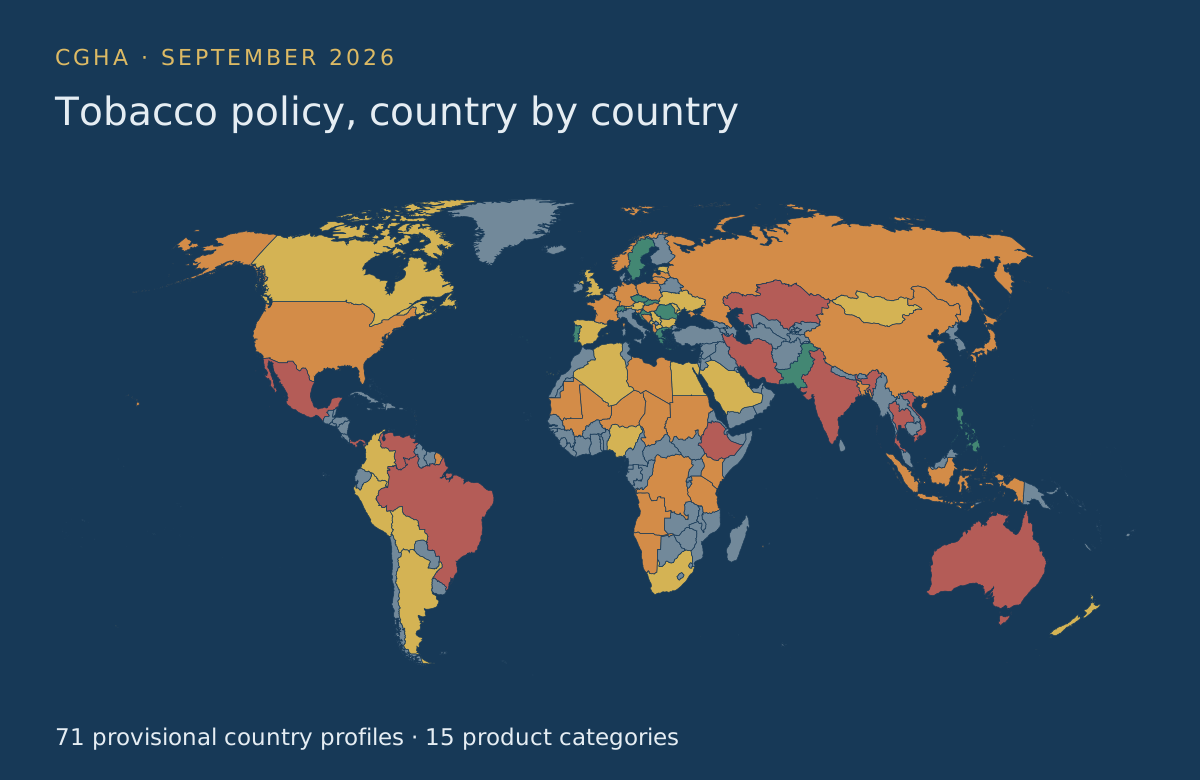
The clearest example of the broader shift is probably nicotine policy. As Jeffrey Singer and others at Cato Institute have repeatedly argued, people smoke for nicotine but die primarily from combustion. From a pure harm-reduction perspective, the policy implication should be relatively straightforward: encourage smokers to move toward dramatically safer delivery systems.
And yet many public-health institutions increasingly appear uncomfortable not merely with smoking, but with nicotine consumption itself. This helps explain why flavored vape bans proliferate, nicotine pouches face growing scrutiny, and safer alternatives are often regulated almost as aggressively as cigarettes themselves.
The issue increasingly becomes not “How do we reduce harm?” but “How do we eliminate the behavior?”
Gambling and the collapse of categories
The gambling debate illustrates this shift clearly. Serious gambling addiction exists. Some people lose control completely. Mobile betting systems and algorithmic engagement tools create genuine risks. But something larger is happening politically. Increasingly, gambling is no longer discussed primarily as fraud prevention, organized crime, or integrity management. Instead, it is framed as a behavioral-health issue and a justification for expanding systems of monitoring and intervention.
This becomes even more complicated because the distinction between gambling and investing is collapsing. Prediction markets, crypto trading, retail options speculation, fantasy sports, and event contracts increasingly overlap behaviorally and mathematically. A hedge-fund trader speculating on derivatives is generally considered sophisticated. A venture capitalist risking millions on startups is viewed as productive and innovative. Yet sports betting increasingly attracts public-health language and behavioral-surveillance proposals.
Partly because modern societies distinguish not merely between risks, but between acceptable and unacceptable forms of risk-taking. And class matters enormously in those distinctions.
Consent, coercion, and COVID
This tension became especially visible during COVID. WHO and much of the global-health community formally embrace autonomy, rights-based frameworks, and informed consent. Yet during the pandemic many institutions simultaneously supported mandates, coercive restrictions, employment penalties, travel restrictions, and strong social pressure around vaccination.
Regardless of one’s view of the vaccines themselves, this revealed a deeper tension within modern public health: does it fundamentally trust individuals to make informed decisions, or does it increasingly assume that technocratic institutions should manage behavior on their behalf? The more uncertainty exists, the stronger the argument for informed consent, transparency, humility, and proportionality.
Governments therefore occupy increasingly contradictory positions. They tax gambling, depend on alcohol revenue, promote state lotteries, tolerate pornography, and encourage speculative markets while simultaneously moralizing about many of the same behaviors. The modern state increasingly profits from appetite while regulating it.
What a research agenda requires
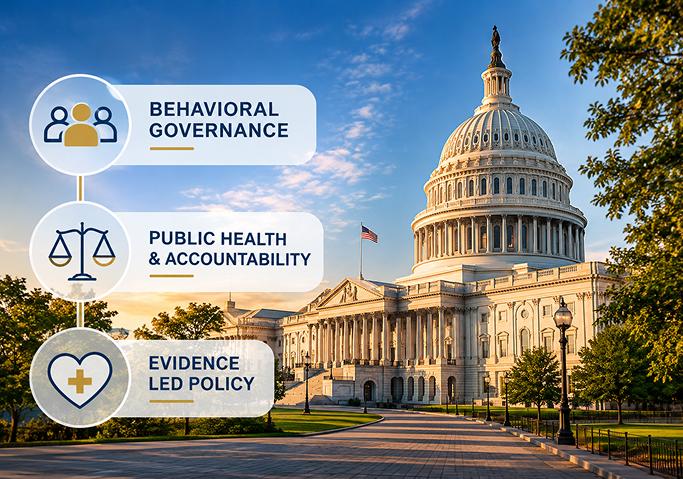
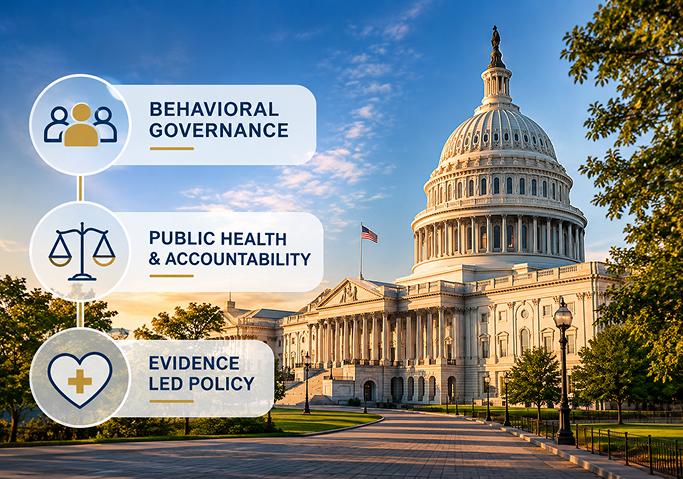
A serious research agenda therefore needs to examine voluntary versus involuntary risk, harm reduction versus abstinence politics, informed consent versus technocratic coercion, and public health versus behavioral governance.
THE ARGUMENT This is not an argument against public health. It is an argument for proportionality, transparency, informed choice, and humility. Once public health shifts too far from informing citizens toward managing lifestyles, it risks becoming something very different from what it originally claimed to be.