Abstract
Advocacy and litigation can improve health while operating within incentives that reward institutional survival, publicity and continued activity. This paper examines how uncertain evidence can be amplified through research, campaigning and legal claims, using PFAS, GLP-1 medicines, glyphosate, talc and selected comparative examples. It distinguishes documented risks from overbroad causal claims and treats organizational persistence as a hypothesis to test. The proposed accountability standard combines evidence provenance, reciprocal financial transparency, explicit revision criteria and measurement of health outcomes.
Executive summary
Advocacy can expose genuine dangers, improve public health and hold powerful institutions accountable. Litigation can compensate victims and uncover concealed corporate information. Yet these activities also operate within systems of incentives: donor funding, professional reputation, legal fees, institutional growth and political influence. Those incentives can reward sustained campaigning more readily than measurable improvements in health.
This paper examines how legitimate scientific uncertainty may be translated into categorical public claims, legal liability and regulatory pressure. It considers PFAS, GLP-1 medicines, glyphosate, talc, food classification, vaccine safety and nicotine harm reduction. It does not presume that alleged harms are imaginary. The test is whether public claims accurately reflect the underlying evidence, exposure conditions, benefits, uncertainty and causal limitations.
The argument extends CGHA’s earlier four-paper lawfare series. The central proposition is that institutions should be judged by outcomes and their willingness to correct mistakes, rather than by the number of campaigns, lawsuits, regulations or declarations they generate.
When advocacy becomes an institution
Campaigns begin with problems, but over time acquire staff, budgets, donors, professional networks and reputations. Such capacity can help them achieve their goals. It can also create a tension: a problem successfully diminished may threaten the organization’s reason for continuing, while a succession of new threats can sustain its relevance.
This is an institutional incentive, not an allegation that individual campaigners are dishonest. Public-choice and principal–agent theories help explain why organizations may develop interests distinct from those of their intended beneficiaries. Similar pressures affect corporations, universities, regulators and law firms.
The principal–agent problem is concrete: donors seek improvements in health, but managers are often rewarded for observable intermediate products—campaigns, meetings, regulations and publicity. Disease reductions take longer to measure and are harder to attribute. Organizational survival can therefore favor activities with visible outputs over interventions with superior but less visible outcomes. This is a hypothesis about incentives, not a claim that all long-lived organizations have failed. [1]
A fair test must examine alternatives. Did the organization evaluate direct services, substitution technologies, independent research and sunset provisions? Did it abandon programs after disappointing evaluations? Sustained advocacy is justified when harm persists; a mission becomes questionable when neither changing evidence nor demonstrated success changes tactics.
Science typically advances through qualified claims. Laboratory studies reveal possible mechanisms, observational studies identify associations, randomized trials estimate treatment effects, and surveillance systems flag emerging safety signals. Each form of evidence answers different questions.
In public campaigns, these distinctions can be compressed. Hazard becomes ordinary-use risk; association becomes causation; relative risk is reported without baseline probability; a possible adverse event becomes an established drug injury; and evidence about one compound is generalized to a whole chemical class.
This distortion does not require fabricated research. Selective quotation, omitted denominators, repeated coverage and dramatic individual narratives can make weak evidence appear stronger. The same criticism applies when companies exploit uncertainty to minimize genuine harms. The standard must be symmetrical.
Scientific claims travel through several distinct stages. A laboratory finding suggests a mechanism; an observational study estimates an association; a synthesis weighs independent studies; a regulator assesses exposure-specific risk. Advocacy material may collapse these into a single assertion of causation. A responsible account preserves study population, exposure, dose, comparator, absolute effect, uncertainty and limitations. [2, 3]
Repeated citation is not independent corroboration. One paper quoted by a campaign, newspaper, legal complaint and congressional hearing may appear to be four confirmations. The appropriate evidence map follows each claim back to the original dataset. Precautionary action can be rational before certainty exists, but precaution must not be presented as proof or exempted from later reassessment.
Lawfare and the courtroom
Civil litigation is an important accountability mechanism, especially when discovery uncovers information that regulators or companies withheld. But legal advocacy and scientific investigation have different objectives. Lawyers seek to establish or defeat legally sufficient claims for particular clients; scientists seek replicable, generalizable causal understanding.
Large settlements may reflect litigation expense, risk management or the desire to resolve uncertainty. They should not automatically be interpreted as admissions of every alleged health effect. Equally, corporate success in court does not establish universal product safety.
The 2023 amendment to Federal Rule of Evidence 702 clarified that proponents of expert testimony must show that admissibility requirements are met more likely than not. Courts must examine the sufficiency of an expert’s basis and the reliable application of methods, not merely leave every weakness for a jury to weigh. [4]
Toxic-tort disputes often separate general causation—whether an exposure can cause an outcome—from specific causation—whether it caused this person’s injury. Dose reconstruction, latency, background rates and confounding are crucial. Discovery can expose concealed misconduct, while contingency fees and settlement pressure create their own incentives. Neither a settlement nor a large verdict independently establishes scientific consensus.
PFAS real contamination and overbroad inference
PFAS denotes a large family of substances with different properties, exposure pathways and toxicological evidence. Certain compounds, including PFOA and PFOS, raise serious health concerns. Drinking-water contamination can require remediation and justify compensation. Dismissing such concerns as activist invention would be mistaken.
Yet the phrase “forever chemicals” can obscure distinctions between environmental persistence, bioaccumulation, toxicity and exposure-specific risk. Persistence is not itself proof that every detectable exposure causes disease. Nor does a blood concentration establish the cause of an individual illness.
The National Academies’ 2022 review found sufficient evidence of association between PFAS exposure and reduced birthweight, dyslipidemia, kidney cancer and reduced antibody response, with more limited evidence for several other outcomes. It emphasized variation across compounds, exposures and populations. This is evidence of genuine concerns, not permission to generalize every health claim to every PFAS compound. [5]
A research audit should compare original studies and measured exposures with advocacy summaries and expert reports, while documenting actual remediation benefits. It should also record uncertainty, costs of treatment and the consequences of delaying protection.
GLP 1 medicines risks benefits and mass claims
Semaglutide, tirzepatide and related treatments have provided substantial benefits for obesity and diabetes, including important outcomes in certain patient groups. They also have recognized gastrointestinal side effects and other potential harms. A medicine can produce real adverse reactions and still offer considerable net benefit.
Litigation concerning gastrointestinal injuries and other alleged effects illustrates the challenge of moving from temporal association to causation. Spontaneous adverse-event reports are useful safety signals, not reliable estimates of incidence or proof that the medicine caused each event. Diagnostic definitions, dose, duration, underlying illness and appropriate control groups all matter.
In SELECT, 17,604 participants aged 45 and older with established cardiovascular disease and overweight or obesity, but without diabetes, were randomized to semaglutide 2.4 mg weekly or placebo. Over a mean 39.8 months, the primary composite of cardiovascular death, nonfatal myocardial infarction or nonfatal stroke occurred in 6.5% versus 8.0%. The rounded absolute difference was 1.5 percentage points; the hazard ratio was 0.80 (95% CI 0.72–0.90). These findings do not automatically apply to all GLP-1 medicines or patient groups. [6]
The November 2024 FDA Wegovy label reported severe gastrointestinal adverse reactions in 4.1% of treated patients versus 0.9% receiving placebo in clinical trials. It also stated that Wegovy was not recommended for patients with severe gastroparesis. These historical label data concern specific trial populations and must not be subtracted directly from SELECT’s cardiovascular endpoint to calculate a universal net-benefit score. The separate gastrointestinal litigation concerns disputed injury and warning claims, rather than an established finding of liability. [7, 8]
In January 2026 FDA requested removal of suicidal-ideation warnings from certain GLP-1 products after its review found no increased risk. That is an example of revising a safety conclusion, not an exoneration of all adverse effects. Public communication should describe both benefits foregone without treatment and harms attributable to treatment. [9]
Glyphosate hazard is not exposure specific risk
IARC’s glyphosate monograph and EPA’s regulatory assessments should be presented side by side, not as though one automatically invalidates the other. Hazard classification asks whether an agent can cause cancer under some circumstances; risk assessment considers whether harm is likely under specified uses and exposures. A careful account must also recognize that disagreements can concern evidence selection, mechanistic data and analytical judgments, not merely the hazard/risk distinction. A comparison must identify the agencies’ exact questions, datasets and conclusions before assessing how litigants use them. [10, 11]
EPA’s glyphosate assessment remains under review. After the human-health portion of its 2020 interim decision was vacated in 2022, EPA withdrew the interim decision. It released an open-literature search in August 2026, announced additional work with HHS in September and extended comments to November 23, 2026. A historical classification must therefore not be presented as the final outcome of the pending reassessment. [11]
The Supreme Court’s June 2026 decision in Monsanto Co. v. Durnell concerned preemption of the particular failure-to-warn claim under FIFRA. It did not decide every question about glyphosate’s health effects or every possible manufacturer duty. Legal and scientific conclusions must remain distinct. [12]
Talc distinguish contamination from causal claims
Two distinct questions must be separated: whether particular talc products contained asbestos, and whether exposure to asbestos-free cosmetic talc independently raises ovarian-cancer risk. Product provenance and historical testing can be decisive in the first question. The second depends on epidemiological evidence that may be affected by recall and exposure misclassification. IARC’s 2024 Group 2A evaluation is relevant to the hazard question, but does not independently establish an individual claimant’s exposure or causation. [13]
Case-control and prospective cohort studies need to be compared by design, adjustment, exposure definition and precision—not simply counted as positive or negative. A sympathetic plaintiff deserves a fair hearing; the causal inference still requires scrutiny. Conversely, corporate records showing concealment or defective quality control should not be dismissed because a population-level estimate is uncertain. [14]
Food vaccines and nicotine category errors
Ultra-processed foods encompass products with widely varying nutrient profiles. Evidence concerning dietary patterns cannot always justify treating every product in a processing category as equally harmful. Nutritional composition, quantity consumed, affordability, substitutes and overall diets must inform policy.
Vaccines provide substantial protection against disease while carrying some genuine adverse-event risks. Neither a passive safety report nor a negotiated compensation settlement automatically proves causation. Equally, population benefits do not justify dismissing credible signals of rare injuries. A transparent system must investigate both. [15, 16]
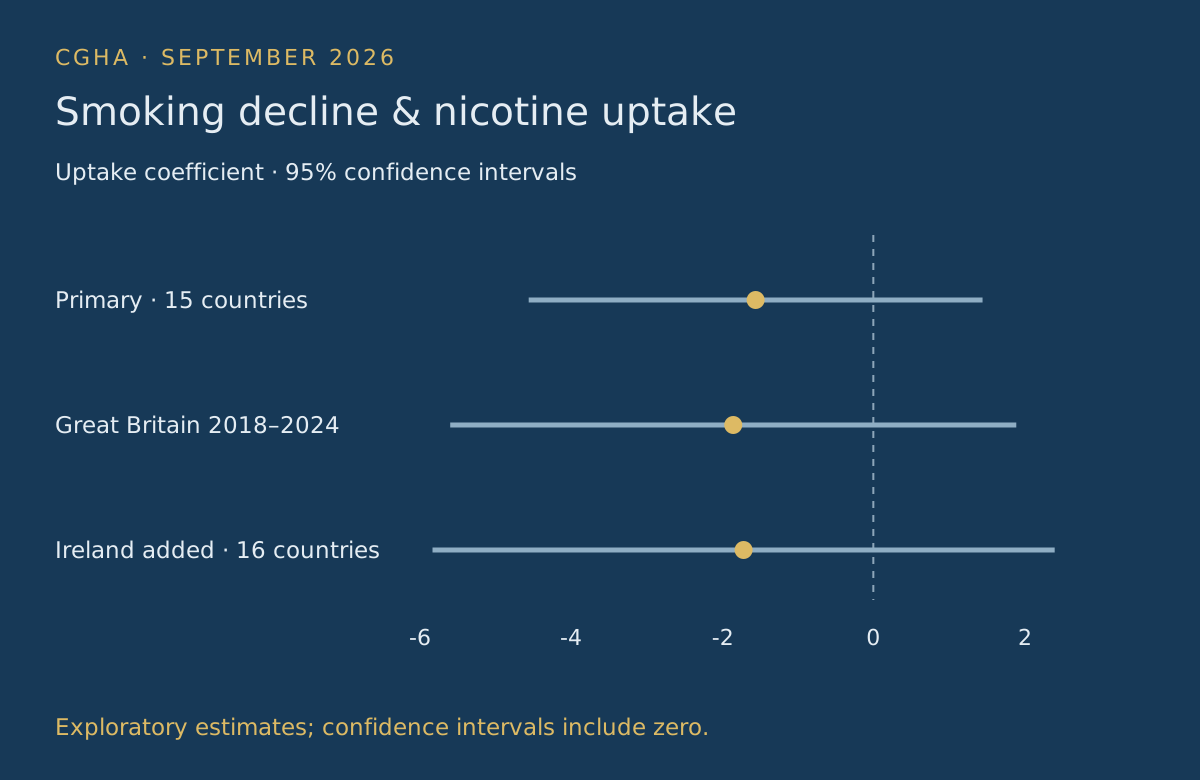
Smoking’s greatest health damage is driven primarily by inhaling combustion products. Nicotine is addictive and not risk-free, but noncombustible alternatives may substantially reduce exposure to many toxicants. Campaigns restricting those products should assess youth uptake alongside adult switching, smoking persistence and illicit-market consequences. The endpoint is avoidable illness and death, not simply the number of nicotine prohibitions enacted.
The National Academies’ 2024 review found evidence establishing a causal relationship between the two reviewed mRNA COVID-19 vaccines and myocarditis, while evidence for several other vaccine–outcome pairs remained inadequate. A causal finding about one outcome must not be generalized to every reported event; inadequate evidence must not be described as proof of no risk. [15]
The Cochrane living review’s 2025 update found high-certainty evidence that nicotine e-cigarettes improved smoking cessation compared with nicotine-replacement therapy. Cessation effectiveness does not establish lifetime safety. Comparative policy analysis must also assess adult switching, youth uptake, dual use, product quality and illicit supply. [17]
The reinforcing institutional loop
An initial study or safety signal may prompt an advocacy campaign. Campaign coverage can generate public concern, regulatory attention and litigation. Litigation may then produce expert opinions, discovery documents, advertising and additional media coverage. This attention can encourage new research funding, further claims and continued institutional mobilization.
Such feedback is a hypothesis, not evidence of a centrally coordinated conspiracy. Each participant may have legitimate motives. The empirical task is to determine when repeated claims are independently corroborated and when many institutions merely amplify the same limited underlying evidence.
The financial dimension includes philanthropic grants, contingency fees, litigation finance, retained experts, corporate defense costs and regulatory budgets. Conflicts should be disclosed and investigated on all sides; funding alone does not invalidate a scientific finding.
The research task is to build two transparent maps: an evidence-provenance map linking original datasets to reports, testimony and claims; and a financial map identifying disclosed grants, expert compensation, contingency arrangements and litigation financing. Funding is a potential conflict, not automatic disproof. The model is weakened when institutions publish contrary findings and revise positions.
Building on CGHA s four lawfare papers
This paper is a companion to CGHA’s earlier lawfare research. “When Process Becomes Punishment” examined how the burdens of legal proceedings can exert pressure independent of final judgment. “When Evidence Becomes Authority” considered how scientific classifications acquire influence as they move through institutions. “Beyond Deep Pockets” examined professional and reputational pressures beyond corporate defendants. “Silence in Geneva” extended the discussion to international health governance.
The new contribution is the question of persistence: why might these processes continue or expand even when evidence changes, original objectives are partly achieved or a policy’s unintended consequences become visible? The same question can be asked of climate-attribution litigation, where the established fact of anthropogenic climate change must be distinguished from attribution of particular losses to particular defendants.
PFAS remediation may be justified even when particular disease claims remain unresolved. FDA warning revisions may demonstrate correction rather than capture. Such counterexamples are necessary tests of the institutional hypothesis.
An accountability test for advocacy and litigation
An accountability test begins by tracing each major claim to original datasets. The dossier should identify the causal proposition, population, exposure or dose, comparator, study design, absolute effect, uncertainty and strongest contradictory evidence. Campaign statements and expert opinions can then be compared with the source rather than with one another.
The accompanying incentives record should identify verified grants, expert compensation, litigation finance, corporate interests and settlement terms. A disclosed interest prompts scrutiny; it does not determine whether a finding is true. Evaluators should state what evidence would change their conclusions.
Outcome evaluation should measure health and welfare, including exposure reduction, treatment access, substitutions, costs and unintended harms. Publicity, filings, bans and settlement values are intermediate outputs. Independent review matters especially where an organization commissions research, campaigns on it and evaluates its own success.
Conclusion
Advocacy and litigation can serve the public interest, but neither is a proxy for scientific truth. Both are embedded in institutions with incentives that can sometimes favor organizational continuation over resolution of the underlying problem.
The solution is not to presume that activists, lawyers or companies are acting in bad faith. It is to insist on consistent evidentiary standards, transparent interests, explicit acknowledgment of uncertainty and a willingness to change course. An organization that cannot imagine its own mission being achieved—or identify evidence that would alter its campaign—risks preserving the campaign rather than serving the cause.
A trustworthy institution must be capable of changing its mind. Regulators should tighten controls when harms are established and reconsider them when risk estimates fall. Manufacturers should disclose material safety findings; advocacy organizations should recognize genuine benefits from technologies they initially opposed.
The purpose of this paper is to establish a research standard, not to pronounce every contested lawsuit fraudulent. Claims of pseudoscience should be reserved for identifiable methodological defects or misrepresentations, demonstrated with the original evidence. The same standard must apply to industry, nonprofit organizations, regulators and CGHA itself.
References
1. Olson, M. (1965) The Logic of Collective Action. Harvard University Press. Niskanen, W. (1971) Bureaucracy and Representative Government. Aldine Atherton.
2. National Research Council (1983) Risk Assessment in the Federal Government. https://doi.org/10.17226/366
3. Hill, A.B. (1965) The environment and disease association or causation. https://pmc.ncbi.nlm.nih.gov/articles/PMC1898525/
4. Federal Rules of Evidence (2023) Rule 702 and advisory committee note. https://www.law.cornell.edu/rules/fre/rule_702
5. National Academies of Sciences Engineering and Medicine (2022) Guidance on PFAS Exposure Testing and Clinical Follow Up. https://doi.org/10.17226/26156
6. Lincoff, A.M. et al. (2023) Semaglutide and cardiovascular outcomes in obesity without diabetes. New England Journal of Medicine 389 pp. 2221–2232. https://doi.org/10.1056/NEJMoa2307563
7. US Food and Drug Administration (2024) Wegovy prescribing information revised November 2024 sections 5.6 and 6.1. https://www.accessdata.fda.gov/drugsatfda_docs/label/2024/215256s015lbl.pdf
8. US District Court Eastern District of Pennsylvania (n.d.) MDL 3094 GLP 1 receptor agonists products liability litigation. https://www.paed.uscourts.gov/mdl/mdl-3094-re-glucagon-peptide-1-receptor-agonists-glp-1-ras-products-liability-litigation-gi
9. US Food and Drug Administration (2026) Requests removal of suicidal behavior and ideation warning from GLP 1 medications January 13. https://www.fda.gov/drugs/drug-safety-communications/fda-requests-removal-suicidal-behavior-and-ideation-warning-glucagon-peptide-1-receptor-agonist-glp
10. IARC (2017) Some Organophosphate Insecticides and Herbicides Volume 112. https://publications.iarc.who.int/549
11. US Environmental Protection Agency (2026) Glyphosate review history and current assessment. https://www.epa.gov/ingredients-used-pesticide-products/glyphosate Additional September update https://www.epa.gov/newsreleases/epa-and-hhs-announce-new-scientific-partnership-strengthen-glyphosate-review Comment extension https://www.epa.gov/pesticides/epa-extends-comment-period-glyphosate-human-health-open-literature-search-document
12. Monsanto Co. v. Durnell 609 U.S. 371 (2026). https://www.supremecourt.gov/opinions/25pdf/24-1068_n7ip.pdf
13. IARC (2024) Volume 136 Talc and acrylonitrile evaluation. https://monographs.iarc.who.int/news-events/volume-136-talc-and-acrylonitrile
14. National Cancer Institute (n.d.) Ovarian cancer prevention evidence on perineal talc exposure. https://www.cancer.gov/types/ovarian/hp/ovarian-prevention-pdq
15. National Academies of Sciences Engineering and Medicine (2024) Evidence Review of the Adverse Effects of COVID 19 Vaccination. https://doi.org/10.17226/27746
16. US Food and Drug Administration (n.d.) FDA Adverse Event Reporting System limitations and data. https://www.fda.gov/drugs/surveillance/fda-adverse-event-reporting-system-faers
17. Lindson, N. et al. (2025) Electronic cigarettes for smoking cessation. Cochrane Database of Systematic Reviews CD010216. https://pmc.ncbi.nlm.nih.gov/articles/PMC12599494/