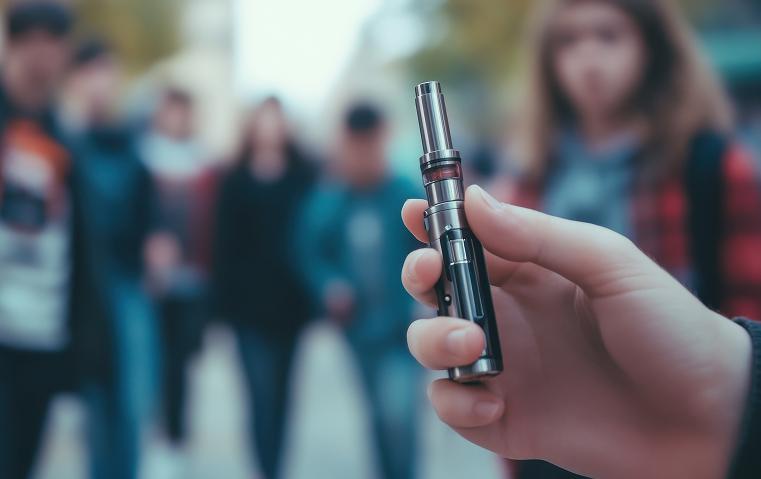
Britain once understood something many countries still struggle to grasp: the fastest way to reduce smoking is to make it easier for smokers to leave cigarettes behind. Vapes and other smoke-free nicotine products offered adults alternatives they might actually want to use. Britain is now in danger of dismantling that advantage one restriction at a time.
The government is [consulting on packaging, appearance and display rules](https://www.gov.uk/government/consultations/tobacco-and-vapes-packaging-appearance-and-display/tobacco-and-vapes-packaging-appearance-and-display). Its preferred approach would put vapes and nicotine pouches in plain white packaging, narrow flavour descriptions, limit device colours and restrict shop displays. [Action on Smoking and Health (ASH)](https://ash.org.uk/campaigns/the-tobacco-and-vapes-bill/have-your-say-on-tobacco-and-vape-packaging-appearance-and-display) urges the public and health professionals to support the package. Responses close on October 2.
This is not an argument for selling nicotine to children. Addiction is a real cost, and retailers who sell to minors deserve effective enforcement. It is an argument for keeping risks in proportion. As the [US Food and Drug Administration explains](https://www.fda.gov/tobacco-products/health-effects-tobacco-use/nicotine-why-tobacco-products-are-addictive), nicotine causes dependence, but the toxic mix in tobacco smoke, rather than nicotine itself, drives the gravest smoking diseases. The [NHS likewise says](https://www.nhs.uk/better-health/quit-smoking/ready-to-quit-smoking/vaping-to-quit-smoking/vaping-myths-and-the-facts/) that nicotine vaping is less harmful than smoking, though not risk-free. Different smoke-free products have different uncertainties; the essential distinction is between continuing to inhale burning tobacco and moving away from it.
A policy that taxes the exit
Around [5.3 million UK adults smoked cigarettes in 2024](https://www.ons.gov.uk/peoplepopulationandcommunity/healthandsocialcare/healthandlifeexpectancies/bulletins/adultsmokinghabitsingreatbritain/2024). A recent [Cochrane review](https://www.cochrane.org/evidence/CD010216_can-electronic-cigarettes-help-people-stop-smoking-and-do-they-have-any-unwanted-effects-when-used) finds that nicotine e-cigarettes can help people stop smoking for at least six months. For a smoker considering a switch, price, flavour, convenience and the ability to find and compare a product matter. They are not incidental marketing details.
From October 1, the UK imposes a [flat £2.20 duty per 10 millilitres of vaping liquid](https://www.gov.uk/government/publications/introduction-of-vaping-products-duty-from-1-october-2026/introduction-of-vaping-products-duty-from-1-october-2026), regardless of nicotine content. The government is [increasing tobacco duty at the same time](https://www.gov.uk/government/publications/tobacco-duty-rate-changes/changes-to-tobacco-duty-rates-from-26-november-2025-and-1-october-2026), which partly preserves the price gap. Yet the Treasury's own [policy costing](https://assets.publishing.service.gov.uk/media/6721d2c54da1c0d41942a8d2/Policy_Costing_Document_-_Autumn_Budget_2024.pdf) explicitly makes a behavioural adjustment for reduced demand for vaping products and increased demand for tobacco products in response to the vape tax. Ministers should explain why they accept even some substitution back toward cigarettes as the price of this measure, and how large they expect it to be.
The tax follows the [June 2025 ban on single-use vapes](https://www.gov.uk/government/news/single-use-vapes-banned-from-1-june-2025), while further packaging and display restrictions are proposed. A smoker experiences the combined effect: a preferred device disappears, a legal replacement costs more, and the alternatives become harder to see or distinguish. The [consultation acknowledges](https://www.gov.uk/government/consultations/tobacco-and-vapes-packaging-appearance-and-display/tobacco-and-vapes-packaging-appearance-and-display) that it cannot yet produce an overall monetised assessment of social benefits and costs. Its [Regulatory Policy Committee](https://www.gov.uk/government/publications/rpc-opinion-tobacco-and-vapes-packaging-appearance-and-display/rpc-opinion-options-for-standardising-packaging-for-vaping-products-and-nicotine-products) rated the packaging options assessment fit for purpose, but called for a clearer reason for selecting the preferred option and better treatment of uncertain health effects. Those qualifications matter when several rules interact.
High prices and constrained legal supply also create an opening for unregulated sellers. The exact illicit share of Britain's vaping market is contested, so a headline estimate should not be treated as a settled fact. The mechanism is plain enough: if demand persists while compliant products become costlier or less convenient, some trade will seek other channels. That risks weakening age checks and product standards along with tax collection. Licensing, inspections and traceability offer a more direct response to irresponsible retailers than making all legal products less accessible.
Other countries are running different experiments
Britain is part of a wider movement, but the approaches differ in important ways.
Country | Policy direction | What it can and cannot tell Britain |
|---|---|---|
General retailers cannot display vaping products; specialist shops may display them inside but not visibly from outside. [Flavour names and child-oriented imagery are restricted](https://www.health.govt.nz/regulation-legislation/vaping-herbal-smoking-and-smokeless-tobacco/requirements/packaging-and-labelling-requirements). | This shows a possible distinction between shielding children from street-facing promotion and letting adults inspect products in specialist shops. It does not establish the long-term effect on smoking. | |
[Australia](https://www.health.gov.au/news/changes-to-vaping-in-australia-from-1-july) | Since 2024, vapes have been limited to pharmacy supply; adults may obtain eligible products without a prescription from participating pharmacies. | This is a far more restrictive access model than the UK proposal. Australia's [2022–23 national data](https://www.aihw.gov.au/reports/australias-health/vaping-e-cigarettes) predate the reform; they cannot establish its effects. |
Flavours other than tobacco, marketing, displays and distance sales have faced strong restrictions. | Finland has reduced smoking under this model, so it would be wrong to claim strict vape rules necessarily raise smoking everywhere. Its wider tobacco policies and social conditions make one-rule comparisons unreliable. | |
Federal rules govern promotion, nicotine concentration, packaging and labelling. Restrictions on promoting certain flavour categories already exist; [further flavour limits have been proposed](https://www.canada.ca/en/health-canada/corporate/about-health-canada/legislation-guidelines/acts-regulations/forward-regulatory-plan/plan.html). | Existing rules and proposals must not be conflated. Canada's example shows how a series of individually defensible controls can accumulate. | |
Oral nicotine alternatives, particularly snus, have long been widely used alongside a steep fall in smoking. | Sweden is a reminder that nicotine use and smoking are different public health measures. It does not prove that every new nicotine user displaced a potential smoker. |
The latest readily available surveys put the scale of smoking and alternative nicotine use in perspective:
Country and survey population | Smoking | Vaping | Nicotine pouches or oral nicotine |
|---|---|---|---|
Great Britain, adults 18+, [ASH 2026](https://ash.org.uk/resources/view/use-of-e-cigarettes-among-adults-in-great-britain) | 11% current smoking | 10.3% current vaping | 1.4% current pouch use |
New Zealand, ages 15+, [Health Survey 2024/25](https://www.health.govt.nz/monitoring-statistics/surveys/new-zealand-health-survey/publications/202425-survey-publications/trends-in-smoking-and-vaping) | 6.8% daily smoking | 11.7% daily vaping | No comparable national pouch rate in this survey |
Australia, ages 14+, [2025 national survey](https://www.aihw.gov.au/reports/illicit-use-of-drugs/national-drug-strategy-household-survey/contents/insights) | 5.6% daily smoking | [6.0% current; 3.6% daily vaping](https://www.aihw.gov.au/reports/smoking-e-cigarettes/vaping-e-cigarette-use) | [1.8% used pouches in the past year](https://www.aihw.gov.au/reports/smoking-e-cigarettes/emerging-nicotine-products-in-the-ndshs) |
Finland, ages 20–64, [THL 2024](https://thl.fi/en/data-and-statistics/tobacco-and-nicotine-products) | Around one in ten smoked daily | THL describes adult daily vaping as low, without a total on this summary page | THL reports roughly one in eight men aged 20–39 used pouches daily; no all-adult total is given here |
Canada, ages 15+, [CTNS 2022](https://www.canada.ca/en/health-canada/services/canadian-tobacco-nicotine-survey/2022-summary.html) | 10.9% current; 8.2% daily smoking | 5.8% past-30-day vaping | No comparable pouch measure in that survey |
Sweden, ages 16–84, [Public Health Agency 2024](https://www.folkhalsomyndigheten.se/the-public-health-agency-of-sweden/living-conditions-and-lifestyle/andtg/tobacco/use-of-tobacco-and-nicotine-products/) | 5% daily smoking | 4% daily or occasional vaping; about a quarter of these users vape daily | 5% daily nicotine pouch use; daily snus use is 22% of men and 10% of women, including both tobacco snus and pouches |
Reading the table: These are each country's reported measures, not a harmonised ranking. Ages, years and definitions differ. “Current,” “daily,” “past 30 days” and “past year” cannot be compared as if identical; pouch use and snus also overlap in Sweden. Britain's official [2024 ONS estimate](https://www.ons.gov.uk/peoplepopulationandcommunity/healthandsocialcare/healthandlifeexpectancies/bulletins/adultsmokinghabitsingreatbritain/2024) of 10.6% smoking uses a different survey and geography from the 2026 ASH row.
The data complicate any simple story. In Australia, daily smoking fell from 8.3% in 2022–23 to 5.6% in 2025, while current vaping fell from 7.0% to 6.0%; these observations do not isolate the effect of pharmacy-only sales. In New Zealand, daily vaping has risen while daily smoking has fallen over the longer period, though smoking's decline recently slowed. Sweden's low smoking rate coexists with extensive oral nicotine use. Finland shows that smoking can also decline under tighter vape controls. Britain should borrow carefully and ask what happens to smoking, rather than count a decline in legal vape sales as an automatic success.
ASH should answer for smoking outcomes
ASH has a legitimate concern. Its [2025 youth survey](https://ash.org.uk/uploads/Use-of-Vapes-Among-Young-People-in-Great-Britain-2025.pdf?v=1752076968) estimated current vaping among 11–17-year-olds at about 7%, after an earlier rise. Cartoon imagery, toy-like devices and sales to minors warrant action. ASH also acknowledges that vaping helps adults quit. The disagreement is about whether its preferred package will protect children while preserving that route out of smoking.
An organisation called Action on Smoking and Health should be especially wary of protecting cigarettes from competition. ASH may sincerely intend to end smoking. But if the restrictions it supports make smoke-free alternatives less affordable, less visible and less appealing, while some smokers stay with or return to cigarettes, it risks becoming pro-smoking in effect. Intentions cannot settle that question; outcomes must.
The government should remove designs plainly directed at children, enforce age limits through licensing and inspections, and require honest nicotine-strength and product information. It should allow accurate flavour descriptions and let adults see and compare smoke-free products inside shops. Then it should publish an integrated assessment of youth initiation, adult switching, relapse, cigarette sales and illicit supply. Consumers who have switched, or are trying to switch, belong in that consultation too.
Ministers are right to ask how to keep nicotine products away from children. They must also answer the harder question: if a rule leaves more people smoking, on what grounds can it be called a public health success?