The Economist recently declared that Anthony Fauci’s private diary reveals “a conscientious public servant trying to save as many lives as he could.” It described his appearance before the Senate Homeland Security and Governmental Affairs Committee as an attempt to humiliate him that “should embarrass America.”
That is an extraordinarily forgiving interpretation of the evidence.
Fauci undoubtedly worked punishing hours during the pandemic. He faced an erratic president, intense political pressure, threats against his family, and an unfolding emergency for which nobody possessed complete information. He also helped accelerate vaccine development and sometimes corrected Donald Trump’s more irresponsible pronouncements. None of that should be denied.
But conscientiousness is not measured by hours worked, television appearances accumulated, or hostility endured. It is measured by whether a public official communicates uncertainty honestly, corrects errors promptly, acknowledges conflicts, preserves records, and accepts responsibility for the consequences of his advice.
Judged by those standards, Fauci’s diary raises serious questions that The Economist largely avoids.
The trap of Trump derangement
Trump deserves a substantial share of the blame for America’s pandemic response. He minimized the threat early, spoke carelessly, promoted dubious treatments, personalized policy disputes, and frequently substituted instinct for disciplined analysis. The Biden administration, state governors, public-health agencies, teachers’ unions, and other powerful institutions also made consequential mistakes.
The problem is that much of the media converted a complicated institutional failure into a simple morality play. Trump represented ignorance and irresponsibility; Fauci represented science, competence, and decency. Once that framing became embedded, evidence could no longer be assessed symmetrically. Trump’s errors confirmed his unfitness. Fauci’s errors demonstrated only that good people sometimes make mistakes under pressure.
This is Trump derangement syndrome in its most institutionally damaging form. It does not require believing that every criticism of Trump was wrong. It means allowing opposition to Trump to distort the standards applied to everyone around him.
Fauci became more than an adviser. He became the embodiment of “the science.” Journalists who had once regarded concentrated authority with suspicion increasingly treated questions about Fauci’s conduct as attacks on expertise itself. That transformation protected not only Fauci but the agencies, scientific networks, journals, funders, and media organizations whose decisions now require examination.
What the diary reveals
As Roger Bate documented in Tony’s Diary and the Questions Fauci Won’t Answer, the diary is important not because it establishes a single grand conspiracy. It matters because it exposes the distance between private uncertainty and public authority.
In February 2020, Fauci privately discussed a fatality rate potentially in the range of 0.2–0.3 percent. He understood that reported case-fatality figures would be inflated because mild and asymptomatic infections were being missed. Yet in public congressional testimony on March 11, he emphasized an estimated mortality rate of approximately 1 percent—“10 times more lethal than the seasonal flu.”
The later statement was not necessarily dishonest. The available data were changing rapidly, and estimates legitimately differed according to whether one measured diagnosed cases or total infections. But the public deserved to hear the range, the uncertainty, and the assumptions producing it. Instead, the most alarming defensible figure acquired political force while the lower private estimate disappeared from view.
That pattern recurred. Uncertainty existed in private; confidence dominated in public.
The same problem surrounded the origins of SARS-CoV-2. Scientists privately debated unusual features of the virus and the possibility of laboratory involvement. Some expressed concerns that were far more substantial than the public was led to believe. A companion analysis, What the Scientists Said in Private, documents the contrast between those private discussions and the confidence subsequently communicated through the press.
The influential paper “The Proximal Origin of SARS-CoV-2” concluded that the virus was not a laboratory construct or purposefully manipulated. But that proposition did not exclude every laboratory-associated origin, including collection, passage, adaptation, or accidental release of a naturally occurring virus. Public discussion repeatedly blurred that distinction.
The scandal is not that scientists considered different hypotheses and changed their minds. That is what science is supposed to do. The problem is that private doubt was converted into public certainty without adequate disclosure of the debate, the institutional relationships involved, or the limits of the evidence.
Celebrity, reputation, and collateral damage
The diary also reveals a man highly conscious of his media appearances, celebrity encounters, awards, reputation, and public image. Vanity is not a crime, and most people thrust into worldwide prominence would record at least some of the same experiences. Nevertheless, the imbalance is striking.
There is extensive attention to interviews, praise, criticism, television coverage, and Fauci’s status as a public figure. There is much less sustained reflection on the collateral consequences of pandemic policy: closed schools, developmental losses, missed cancer diagnoses, isolated elderly people, destroyed businesses, delayed treatment, and the unequal burden imposed on poorer families.
That does not prove that ego caused school closures. Governors, mayors, school boards, and unions made the formal decisions. But it is implausible to suggest that America’s most influential public-health communicator had little bearing on them. The diary itself records political officials responding directly to Fauci’s media appearances.
Fauci’s authority mattered precisely because the public had been told that he represented science. When scientific advice carries enormous political weight, its leading spokesman cannot accept credit for favorable outcomes while treating damaging policy decisions as the responsibility of elected officials alone.
The deeper danger is institutional identification: criticism of Fauci became criticism of science; criticism of science became misinformation; and suppressing misinformation became a public-health responsibility. That circular logic made self-correction increasingly difficult.
The gain-of-function question cannot simply be defined away
The Economist also appears to give little serious attention to gain-of-function research, even though it sits near the center of the dispute between Fauci and Senator Rand Paul.
Fauci repeatedly denied that the National Institutes of Health funded gain-of-function research at the Wuhan Institute of Virology. His defense depended heavily on a narrow regulatory definition connected to the federal P3CO framework. But the public question was broader and more important: Did US funding support experiments that enhanced the growth, host range, or pathogenic properties of bat coronaviruses, and were those experiments appropriately supervised?
Even the diary recognizes experiments involving viruses that displayed enhanced growth or pathogenicity in laboratory mice. Semantic arguments over which regulatory category applied cannot substitute for a transparent account of what was funded, what risks were created, what reporting requirements were breached, and how officials responded when they became aware of problems.
This is why Paul’s questioning should not be dismissed as a personal vendetta. Some Republican politicians and commentators plainly want Fauci imprisoned and speak as if conviction should precede investigation. That is wrong. But Paul’s central demand from the beginning has been for truthful answers about pandemic origins, federally funded coronavirus research, and Fauci’s previous testimony. After years of stonewalling and semantic evasions, occasional anger is understandable.
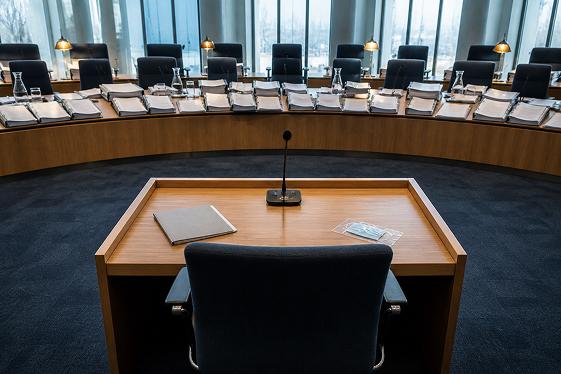
Fauci’s decision to invoke the Fifth Amendment at his latest hearing is not proof of guilt. Constitutional rights apply to unpopular witnesses as fully as to anyone else. Democrats are also entitled to question whether the proposed contempt process is legally sound; Senator Gary Peters has set out that objection publicly.
But constitutional protection does not answer the underlying questions. Nor does it justify depicting congressional scrutiny as inherently disgraceful. The committee has now advanced Paul’s contempt resolution by an 8–5 party-line vote, making the search for truth still more partisan—and therefore less likely to succeed.
The surrounding institutional conduct matters
The issue extends beyond Fauci. His former senior adviser David Morens has pleaded guilty to conspiring to conceal federal records, including communications concerning COVID-19 research funding. Fauci was not charged in that case, and Morens’s misconduct cannot simply be attributed to him.
Nevertheless, the plea destroys the comforting assumption that concerns about evasion, unofficial communications, and obstruction were invented by partisan investigators. At least one senior official within Fauci’s professional orbit has now admitted criminal conduct intended to frustrate transparency.
China concealed information. The World Health Organization repeated unreliable Chinese assurances during the outbreak’s crucial early period. American agencies provided incomplete or misleading accounts of research they had supported. Scientific advisers conveyed greater certainty than the evidence warranted. Journals and news organizations marginalized legitimate questions. Subsequent reviews have too often protected institutional reputations rather than established a complete record.
A serious newspaper should be joining these pieces together. Instead, The Economist concentrates on Republican motives and Fauci’s personal ordeal.
From skeptical liberalism to establishment liberalism
There was a time when The Economist was indispensable because it challenged governments, professional cartels, subsidies, protectionism, and bureaucratic self-interest. Its liberalism was skeptical: experts might be useful, but incentives still mattered; institutions might be necessary, but power still required scrutiny.
Increasingly, that skepticism appears selective. When favored international organizations, credentialed experts, or establishment institutions are challenged from the populist right, the magazine too often defends the institution before investigating the failure.
Its Fauci article exemplifies this change. It acknowledges mistakes, arrogance, and vanity, but packages them within a reassuring portrait of a conscientious servant victimized by Republican extremism. It scrutinizes the motives of the investigators more intently than the conduct being investigated.
This is not analysis overcoming polarization. It is polarization presented in the language of analysis.
A global publication should ask global questions
The omission becomes more serious because The Economist is a global newspaper. It should understand that the failures exposed by COVID-19 are not merely an American partisan quarrel. They bear directly on the international pandemic architecture now being constructed.
The World Health Organization’s Pandemic Agreement was adopted before the crucial Pathogen Access and Benefit Sharing system had been completed. Negotiations over that annex remain unresolved. Questions remain about access to pathogens and sequence information, benefit sharing, intellectual property, contractual obligations, governance, and the distribution of vaccines, diagnostics, and therapeutics.
Lower- and middle-income countries have not been wholly powerless in these negotiations. Several have resisted Western proposals and demanded more meaningful guarantees of access and equity. But they are negotiating within an architecture whose principal assumptions were largely established by Western governments, WHO officials, philanthropic foundations, preparedness organizations, and industries expecting to supply the resulting products and services.
For poorer countries, pandemic preparedness has an opportunity cost. Money committed to surveillance platforms, laboratory networks, vaccine capacity, consultants, reporting systems, stockpiles, and international bureaucracies cannot simultaneously fund malaria control, tuberculosis treatment, maternal health, nutrition, sanitation, or basic primary care.
A genuinely global newspaper should ask who sets these priorities, who receives the continuing expenditure, who bears the cost when promised benefits fail to materialize, and what mechanisms exist to punish concealment or incompetence. By treating expanded preparedness machinery as inherently enlightened, while giving inadequate attention to its beneficiaries and incentives, The Economist functionally holds water for the biopharmaceutical industry and the Western global-health establishment.
That does not require corruption or editorial instruction. Shared assumptions are sufficient. If the newspaper, the agencies, the foundations, and the companies all begin from the premise that more centralized surveillance, more vaccine-oriented preparedness, and more authority for existing institutions constitute progress, then the fundamental questions are never asked.
Truth matters more than imprisonment
Whether Fauci is ultimately prosecuted or imprisoned is less important than establishing an accurate public record. Punishment without understanding would become partisan theater. Exoneration without investigation would preserve the institutional failures that made the COVID-19 response so damaging.
The United States needs something closer to a truth-and-reconciliation process: sworn testimony, document disclosure, protection for witnesses who give complete accounts, serious examination of competing explanations, and a willingness to distinguish error from misconduct. The object should be to establish what happened and prevent its repetition—not merely to identify a villain or protect a hero.
Fauci stood for “the science” more visibly than any other American official. That gave him extraordinary influence and imposed an equally extraordinary obligation to communicate uncertainty, disclose conflicts, correct errors, and accept scrutiny. He failed that test repeatedly.
But the larger failure is systemic. China lied. International and national authorities misled the public. Scientific institutions protected reputations. Much of the media enforced an approved narrative. Pandemic reviews have avoided the hardest questions. Now the same institutional class is asking for more money, more coordination, more surveillance, and more authority through a global Pandemic Agreement.
The central issue is therefore not whether Fauci is a saint or a criminal. It is whether powerful institutions can conceal uncertainty, marginalize dissent, escape accountability, and then acquire still greater authority before their previous conduct has been properly examined.
The Economist once specialized in identifying such failures. In its treatment of Fauci—and its relative incuriosity about the pandemic system now being made permanent—it has become part of the problem.