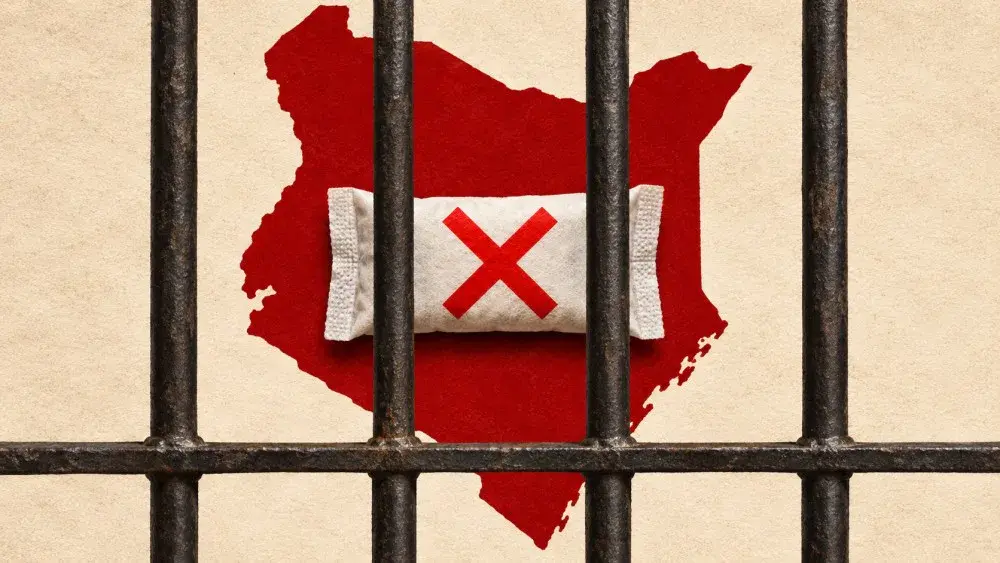
Kenya's Parliament is considering a bill that could send an adult to prison for up to ten years for using a nicotine pouch. An adult who gives up cigarettes and switches entirely to pouches would commit an offense each time they used one. Cigarettes would remain on sale under Kenya's tobacco laws. Before Parliament votes, it should ask what public health objective is served by making the lower-risk choice a criminal offense.
What the bill would do
Clause 51 of the Alcoholic Drinks and Drugs Control Laws (Amendment) Bill, 2026, would insert a new section 14A into the Tobacco Control Act. The proposed section expressly prohibits personal use alongside manufacture, sale, advertising, promotion and distribution. It also applies to anyone who allows, encourages or facilitates use. On conviction, a court could impose a fine of up to KSh 5 million, up to ten years in prison, or both. Ten years is the proposed maximum. The bill received its first reading on November 5 and was referred for committee scrutiny. National Assembly (2026a), cl. 51 � National Assembly (2026b), Hansard, November 5
The sponsor is Kimani Ichung'wah, the National Assembly Majority Leader and a United Democratic Alliance MP. In presenting the bill, he emphasized alcohol abuse, including the proposal to raise the drinking age from 18 to 21, and urged the Administration and Internal Security Committee to move quickly. The Speaker directed that the Health Committee join the scrutiny. When the Speaker asked about vaping, Ichung'wah said, "Vapes are nicotine pouches." Pouches release nicotine in the mouth. Vapes heat a liquid to produce an inhaled aerosol. Shisha, which clause 51 covers alongside pouches, involves inhaling smoke from a waterpipe. The official explanation lists the proposed ban and higher penalties without explaining why using a pouch warrants a decade in prison. National Assembly (2026a), memorandum � National Assembly (2026b), pp. 32-35
What Kenya stands to lose
The WHO's 2025 Kenya profile puts current tobacco smoking at an age-standardized 7.6% among people aged 15 and older in 2023, with cigarette smoking at 6.7%. The underlying problem is concentrated among men. In Kenya's 2022 Demographic and Health Survey, 11.7% of men aged 15-54 smoked cigarettes, compared with 0.7% of women aged 15-49. Kenya's Ministry of Health estimates that tobacco use contributes to roughly 12,000 deaths a year. For adults who carry on smoking, access to a lower-risk alternative can matter even in a country with a relatively low national smoking rate. WHO (2025), Kenya country profile � Kenya Ministry of Health (2026)
Kenya already taxes cigarettes, restricts smoking in public places, bans tobacco advertising and promotion, prohibits sales of tobacco products to children, and requires graphic package warnings. Its 2025 warning update was designed to cover emerging nicotine products as well. A separate Tobacco Control (Amendment) Bill, sponsored by Senator Catherine Mumma in 2024, proposes product approval requirements and specific rules for nicotine pouches and vaping products. Parliament already has a legislative route for regulating these products without making personal use a crime. Kenya Ministry of Health (2025) � Kenya Ministry of Health (2026) � Senate of Kenya (2024), bill digest
Nicotine pouches can sustain dependence, and Kenya's health ministry has raised concerns about flavors, packaging and marketing that appeal to young people. For adults who smoke, the relevant comparison is with continuing to smoke. The U.S. Food and Drug Administration found that the specific pouches it evaluated and authorized expose users to substantially lower levels of harmful constituents than cigarettes and pose lower risks of serious disease. Kenya can use that evidence to design its own product standards and require companies to substantiate claims about relative risk. Kenya Ministry of Health (2026) � FDA (2025)
A blanket ban also changes what enforcement officers would have to do. Checking whether a licensed retailer sells to minors is a familiar regulatory task. Policing a small pouch that an adult uses discreetly means pursuing individuals over conduct that creates no secondhand smoke. A ban would also end lawful sales and remove the leverage that comes with licensing, product testing and traceability for this category. Before taking that step, Parliament should ask for Kenyan data on who uses pouches, how young people obtain them, and how many adults use them in place of cigarettes. Those answers should shape the policy.
The bill's own penalties show how far the proposal has drifted from protecting children. Clause 52 sets a maximum of one year in prison for selling or supplying a tobacco product to a child. Under clause 51, an adult using a pouch would face a maximum ten times as long. The committees should ask the sponsor to explain that disparity and publish any evidence that a ban would reduce smoking-related harm. They should strike clause 51's pouch prohibition and address youth uptake directly through age verification, retailer enforcement, limits on youth-oriented marketing, and clear standards for product strength and labeling. Kenya has good reason to protect children from nicotine dependence and to give adults who smoke a viable route away from cigarettes. It can do both. National Assembly (2026a), cls. 51-52